


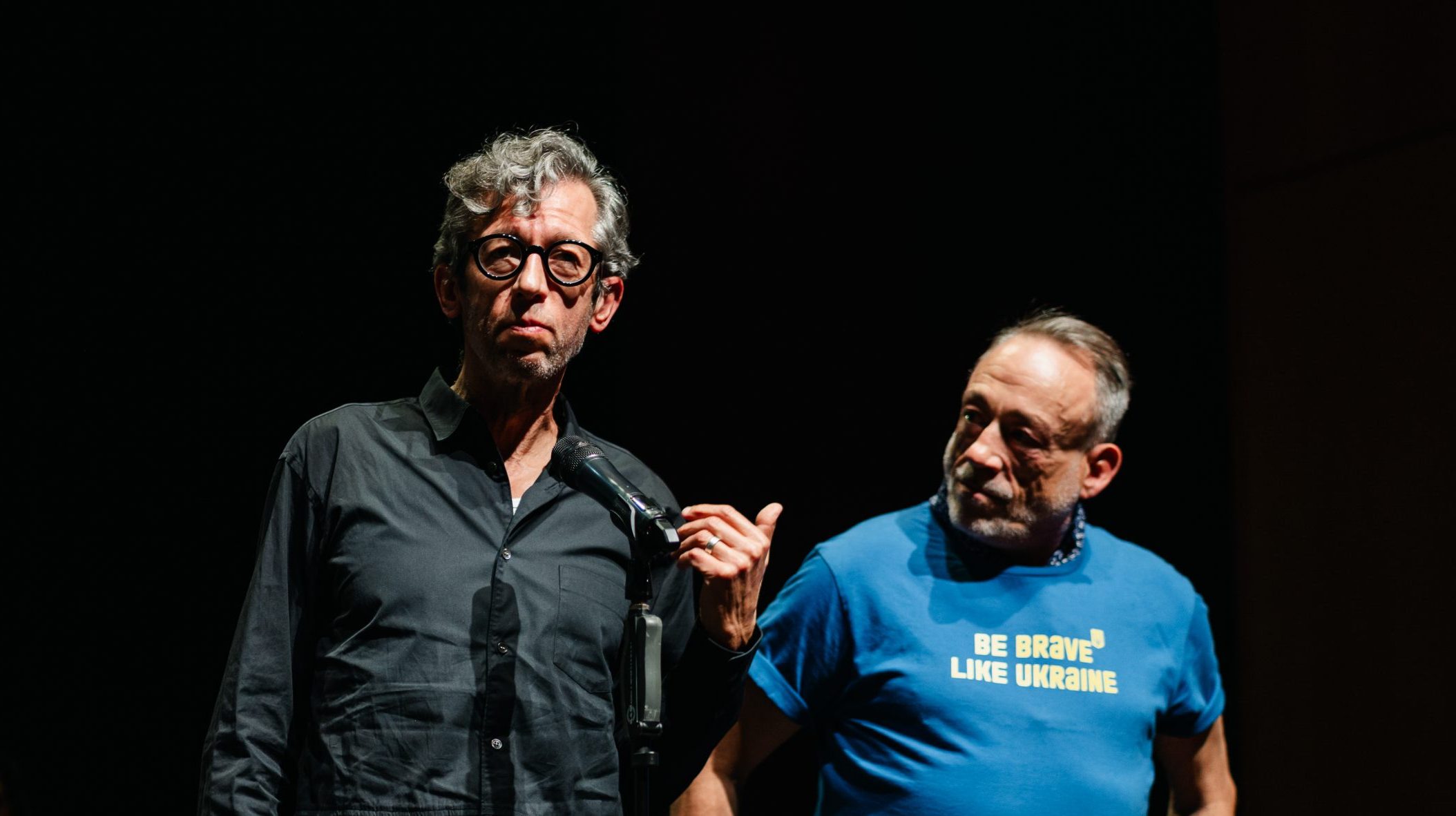
Interview with João Pedro Rodrigues and João Rui Guerra da Mata
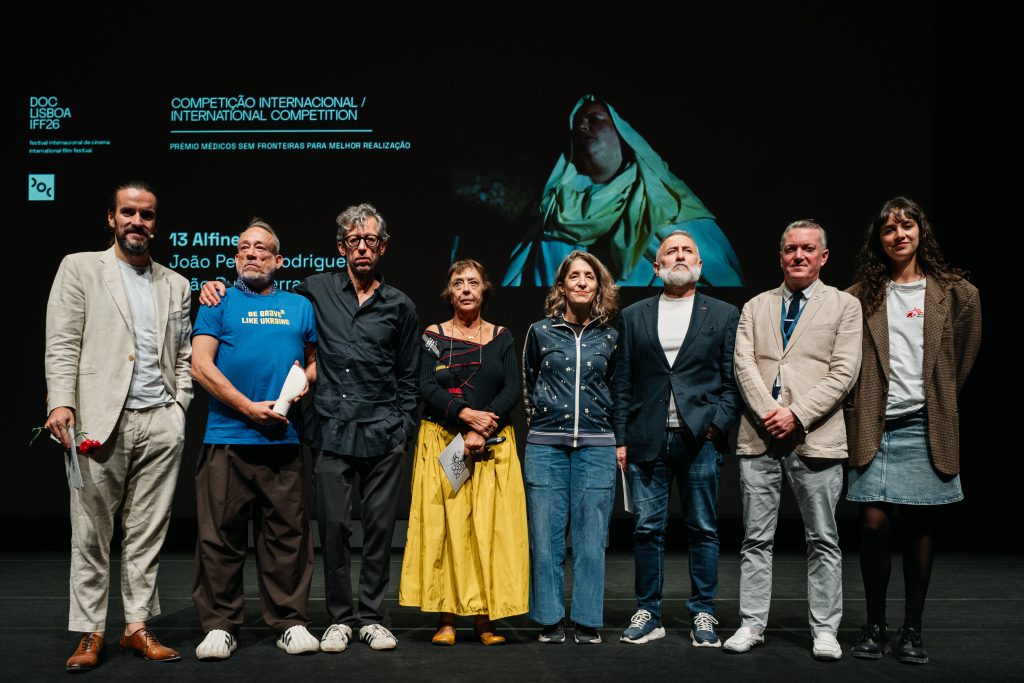
Following the presentation of the Médecins Sans Frontières – Portugal Jury Award for Best International Competition Director at the 24th edition of Doclisboa to directors João Pedro Rodrigues and João Rui Guerra da Mata for their film 13 Alfinetes, we sat down with the filmmakers to discuss their latest work.
In this interview, conducted in November, the directors share insights into the creative process behind the film, the reflections that inform their work, and their experience of returning to the festival.
- First of all, congratulations on receiving the Médecins Sans Frontières – Portugal Jury Award for Best International Competition Director at Doclisboa. What does this recognition mean to you at this stage of your careers?
We don’t make films to win awards. This film in particular came about unexpectedly, as a commission from John Romão for the BoCA Biennial. Perhaps that is why, also unexpectedly, it became our response to the contemporary political and social climate.
- This award recognises your work as directors, with the jury highlighting “a degree of imaginative richness and cinematic invention that the jury simply could not ignore”. How do you receive these words about your work?
We are only interested in singular universes, in cinema, in other art forms, and in life. This recognition from part of the jury makes us very happy and proud. If our film is also, in the jury’s words, a “little train between Lisbon and Madrid”, that real train, which we travelled on so many times, no longer exists. It was almost a premonition of the times we are living in: a railway network whose dismantling began under Cavaco Silva’s government and culminated in today’s neoliberalism. We hope the singularity of our film will help get ideas moving again…
- This award is supported by Médecins Sans Frontières, an organisation committed to a keen and humanist perspective, to standing alongside others and addressing the wounds and myths of contemporary society. How does this resonate with the concerns that gave rise to 13 Alfinetes?
This is perhaps the film in which we have reacted most “in the heat of the moment” to the world around us. We fully identify with the urgency of Médecins Sans Frontières’ mission.
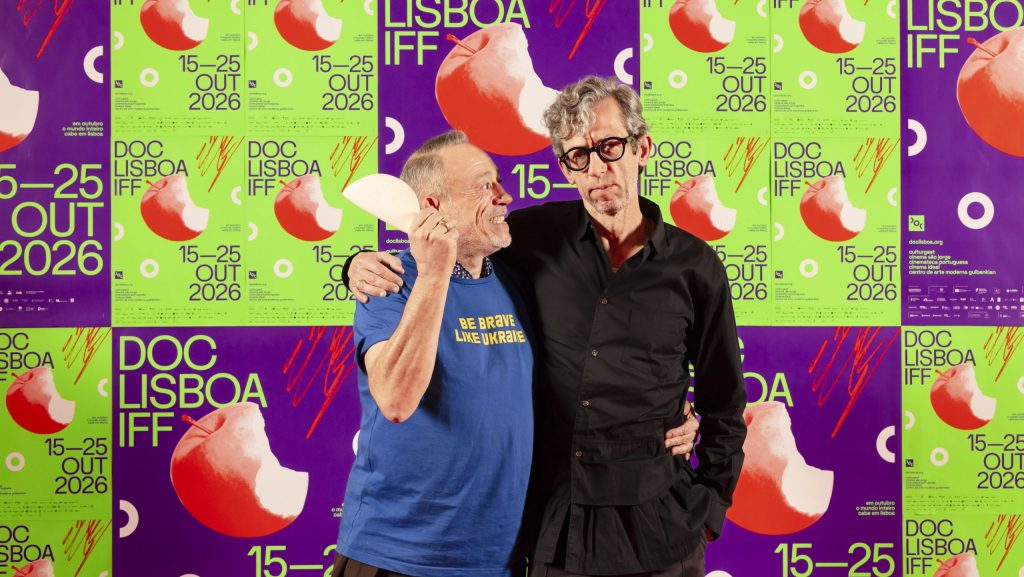
- What was it like to return to Doclisboa, once again in the International Competition?
Doclisboa is a solid, serious festival that also knows how to look at cinema and the world with irony. We appreciate the diversity of the team behind it. We are very happy to be part of it.
- As filmmakers with a deep connection to the city of Lisbon and to the festival, what was it like to share this premiere with the audience? How do the atmosphere and context of this year’s edition relate to your reflections on the city portrayed in the film?
We live in Lisbon and, no matter how much we try to distance ourselves from it, for all sorts of reasons, our paths always end up crossing those of this city and this country. That doesn’t mean we always recognise them as our own, although perhaps, following the social movements now sweeping across several cities in the country, we may begin to recognise ourselves in them once again…
- As artists, what fascinates you so much about mythologies, and particularly the myth of Saint Anthony?
It is impossible not to reflect on the mythologies that shaped us, or sought to shape us.
- In 13 Alfinetes, you use a structure divided into 13 movements to reinterpret the myth of Saint Anthony, from medieval Lisbon and Goya’s 18th-century frescoes in Madrid to present-day Lisbon. How did you navigate the boundaries between historical re-enactment, documentary devices and the rawness of the present?
It was a natural and playful process.
- The film is described as a story of “love, revenge and blood”, confronting hagiography with the profane. In your view, what place does the sacred, or its absence, occupy today in a city marked by its own social and urban contradictions? Is the cinematic gesture of delivering these “13 pinpricks” also a way of clearing our vision of the present?
Perhaps this is our most critical film about the present.


