


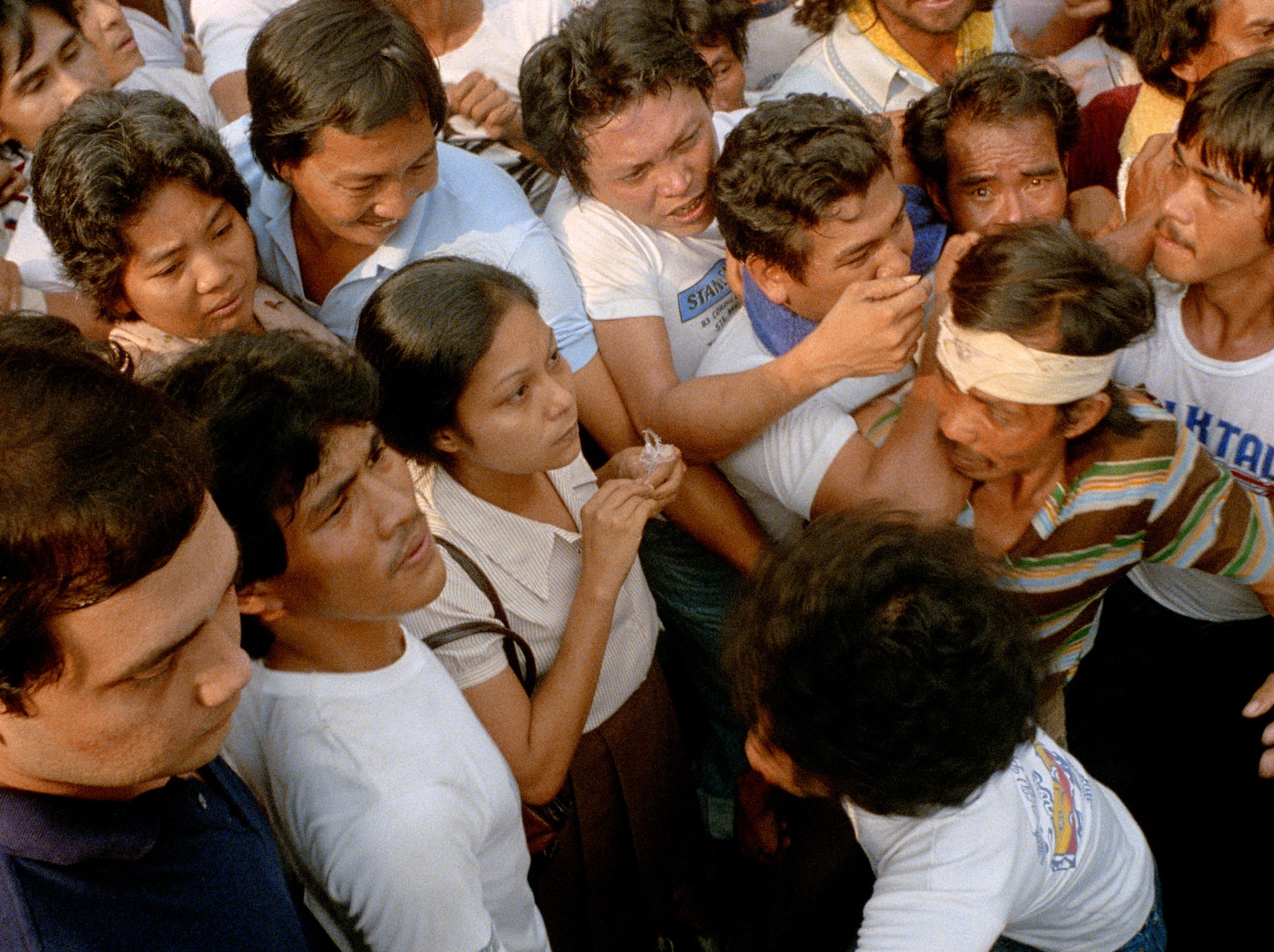
Doclisboa 2026 presents 11 newly restored films in Lino Brocka retrospective, with Khavn in attendance
Organised in partnership with the Cinemateca Portuguesa – Museu do Cinema, with the support of the Embassy of the Philippines in Portugal and the Film Development Council of the Philippines (FDCP), the retrospective Lino Brocka – Kill the National Artist brings together 19 films, including 11 restored works, classics and rarely screened titles by the Filipino filmmaker. Launched on 16 October, the programme also includes an audiovisual performance by Khavn at CAM Gulbenkian and a round table on Brocka’s legacy, featuring Khavn, John Torres and Achinette Villamor.
The 24th edition of Doclisboa presents, in partnership with the Cinemateca Portuguesa – Museu do Cinema, a retrospective dedicated to Lino Brocka (1939–1991), one of the most significant figures in the history of Filipino and Asian cinema. Comprising 19 films, including 11 restored works, the retrospective Lino Brocka – They Killed the National Artist explores a vast and singular body of work, marked by a profound commitment to the social and political realities of the Philippines, bringing together landmark films, rarely screened titles and previously unseen restorations. The retrospective is curated by Khavn, a Filipino filmmaker, musician and artist deeply influenced by Brocka’s work, in collaboration with the programming teams of Doclisboa (Cecilia Barrionuevo) and the Cinemateca Portuguesa (Luís Mendonça).
Having directed more than 60 films over little more than two decades, Brocka built a filmography spanning melodrama, action cinema, comedy, horror and film noir, frequently drawing on the conventions of popular cinema to portray the contradictions of Filipino society. During the dictatorship of Ferdinand Marcos, he became a central figure in cultural resistance, confronting censorship and political persecution. His work, deeply attentive to social inequality, poverty, exploitation and the violence of power, continues to exert a lasting influence on successive generations of filmmakers.
One of the central features of the retrospective is the presentation of 11 restored works, including versions being shown to audiences for the first time. Among them is Wake Up, Maruja (1978), an excursion into tropical Gothic horror starring Susan Roces, in which an actress revisits a role from her past as the boundaries between performance, memory and reality become increasingly unstable. The selection also includes Fight for Us (1989), one of Lino Brocka’s most uncompromising films, addressing the persistence of violence and political repression in the Philippines following the fall of the Marcos dictatorship. Another highlight is the world premiere of the version restored by Cité de Mémoire, with funding from the Film Development Council of the Philippines.
These titles are joined by Weighed But Found Wanting (1974), one of Brocka’s earliest major works, which exposes the hypocrisy, prejudice and structures of exclusion within Filipino society through the eyes of an adolescent. Restored in 4K in 2026 by the FDCP, in collaboration with the Philippine Film Archive (PFA), Carlotta Films and Janus Films (The Criterion Collection), the film returns to the big screen, offering an opportunity to rediscover a work shaped by censorship and the challenges of preserving the Philippines’ cinematic heritage.
The retrospective also includes the major works that established Brocka’s international reputation. Insiang (1976), which opened the retrospective at the Cinemateca Portuguesa, was the first Filipino film to be presented at the Cannes Film Festival. Set in the Tondo district of Manila, it follows a young woman subjected to violence and family betrayal, offering an unflinching portrait of urban poverty and power relations. In Manila in the Claws of Light (1975), a young man arrives in the capital in search of the woman he loves, who has disappeared into a world of exploitation and human trafficking, only to discover a city where the promise of a better life gives way to disillusionment and violence.
The selection continues with Jaguar (1979), presented on 35mm film, a portrait of the relationships between violence, ambition and social inequality, and Macho Dancer (1988), which follows a young man from a rural region of the Philippines who is forced to seek a living in Manila’s sex industry. In Cain and Abel (1982), Brocka brings conflicts of power into a landowning family, where the rivalry between two brothers exposes tensions surrounding inheritance, recognition and authority. Meanwhile, Bona (1980), presented at a preview screening of the retrospective at the Cinemateca Portuguesa in June, follows a young woman’s obsessive devotion to a mediocre and abusive actor. Starring Nora Aunor, the film portrays exploitation and idolisation on both an intimate and a social level.
The retrospective also presents, as Portuguese premieres, Lino Brocka’s first and last films, offering a glimpse of the two ends of a career as prolific as it was diverse. Wanted: Perfect Mother (1970), his debut feature, adapts a comic strip by Mars Ravelo and tells the story of a widower, his four children and a governess who enters their lives. At the other end of his career is Above Everything Else (1991), his final film, made during a period of democratic transition and centred on a journalist who becomes involved with a politician whose power she ought to scrutinise. Separated by more than two decades, these two films reveal the breadth of a career that never ceased to question the relationships between the individual, society and structures of power.
Khavn: revisiting Brocka through cinema, music and archives
Khavn’s presence in Lisbon is another central element of the retrospective. A filmmaker, writer, musician and multidisciplinary artist, Khavn is one of the most important figures in contemporary Filipino independent cinema, associated with the No Wave movement. With an extensive body of work spanning cinema, music and literature, his practice is characterised by formal experimentation, creative freedom and a profound engagement with the history and culture of the Philippines. Lino Brocka’s influence runs throughout his career, making his participation in this retrospective particularly significant.
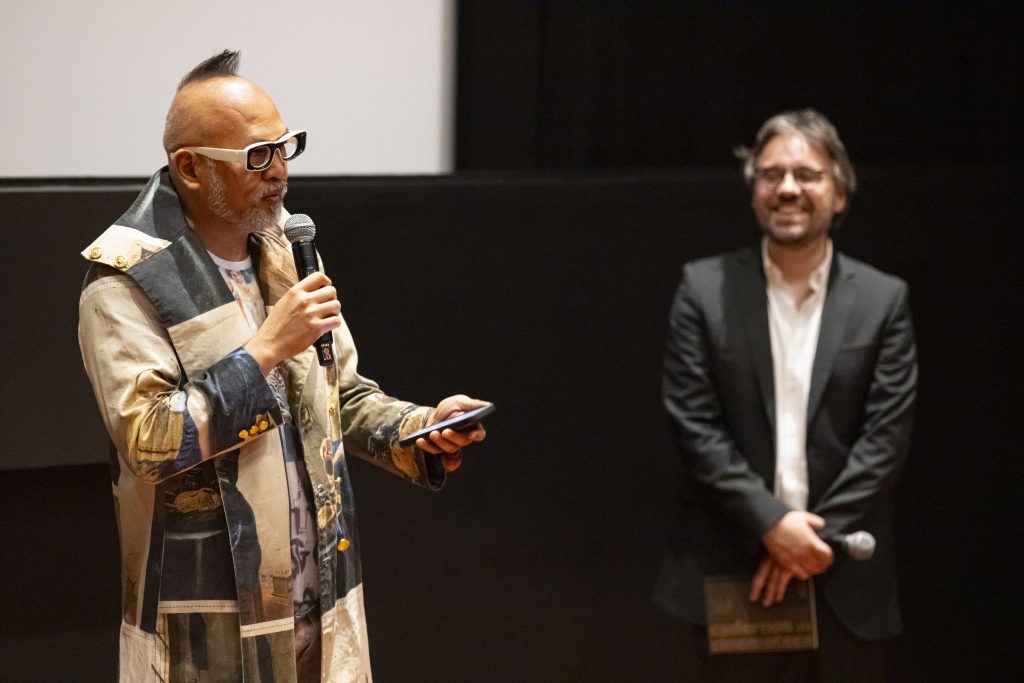
Presentation of the retrospective: Lino Brocka – Kill the National Artist | Credits: Eduardo Martins
Following his attendance at the retrospective’s opening screening of Insiang on 16 October at 6:00 pm at the Cinemateca Portuguesa, Khavn presented the audiovisual performance Lino Brocka – National Anarchist on 17 October at 6:00 pm at CAM – Centro de Arte Moderna Gulbenkian.
Built from fragments of Brocka’s cinematic archive, the performance combines images recovered from his filmography with live piano improvisation by Khavn. Drawing on materials of different origins and qualities, including deteriorated footage and film fragments, the presentation offers different perspectives on Lino Brocka’s work and career.
Accompanying the retrospective, the Cinemateca Portuguesa is also publishing a Caderno da Cinemateca, editado por Luís Mendonça, featuring contributions by Luís Mendonça, Manuel S. Fonseca, Pierre Rissient, Antonio Rodrigues, Carlos Natálio, Nick Deocampo and Khavn, offering different perspectives on Lino Brocka’s work and career.


