


From the Earth to the Moon, we leave Dovzhenko’s Earth through poetry in motion. We highlight three films by Vincent Carelli and the way his work brings together Amerindian communities and their images and history. Herzog presents the life of Katia and Maurice Krafft with images of fire. Argonauts such as Sergei Loznitsa, Oliver Stone and Rithy Panh, as well as a fiction film by Frederick Wiseman, gravitate between the Earth and the Moon. This section continues to scrutinise the world’s pulse.
From the Earth to the Moon
THE MARTYRDOM TRILOGY
Vincent Carelli founded Vídeo nas Aldeias, a project that trains indigenous filmmakers and supports cultural and political activities by indigenous peoples. The premiere of Adeus, Capitão, the last instalment of this trilogy that we present in full, concludes a work that bears witness to the massacre against indigenous peoples, as well as to their struggle, organisation and resistance. More than 30 years of images and stories, which carry with them a history of more than 500 years.
12 Oct
— 21:30
/ 119’
Cinema São Jorge Sala 3


Corumbiara: They Shoot Indians, Don’t They?
Vincent Carelli
2009
/Brazil
/119’
In 1985, Marcelo Santos, from the Brazilian Indian Affairs Bureau, denounced a massacre of Indians in the lawless region of Corumbiara. Vincent Carelli filmed the evidences and since then followed the investigations about a series of genocides in the region.

13 Oct
— 21:30
/ 161’
Cinema São Jorge Sala 3

Martyrdom
Ernesto de Carvalho, Tatiana Almeida, Vincent Carelli
2016
/Brazil
/162’
A grande marcha de recuperação dos territórios sagrados dos guarani-kaiowá vista por Vincent Carelli – um conflito de forças desproporcionais: a revolta pacífica e obstinada dos guarani-kaiowá espoliados contra o aparelho poderoso do agro-negócio.
14 Oct
— 21:30
/ 178’
Cinema São Jorge Sala 3

Goodbye, Captain
Tatiana Almeida, Vincent Carelli
2022
/Brazil
/178’
Krohokrenhum, leader of the Gavião indigenous people, tells his story. From the wars of the ‘brave Indian’ to the contact with the ‘White man’, from the devastation of contagion to the end of the Gavião world, he leads a movement to reconstruct the memory of his people.


ARTISTIC DIFFERENCES: MAKING A FACE AND A FIST
The Cine Mujer collective existed between 1975 and 1986 and its openly feminist filmmaking was pioneering in Mexico. Formed by students from the National School of Film Arts, they produced films that challenged the dominant portrayal of women in Mexican society at the time. A programme organised in partnership with the Artistic Differences, a Break Out project from UnionDocs – Center for Documentary Art, and with the support of the Valdivia International Film Festival.
13 Oct
— 18:00
/ 123’
Cinema São Jorge Sala 3

Y si eres mujer?
Guadalupe Sánchez Sosa
1976
/Mexico
/7’
An analysis on the role education plays in the way gender roles are conceived.


Vicios en la cocina, las papas silban
Beatriz Mira Andreu
1978
/Mexico
/24’
Beatriz Mira, a Brazilian filmmaker living in Mexico, films the housework carried out by women at the end of a decade marked by numerous political and social movements, including feminist groups that disputed the fact that women had been banished from the public sphere, and thus confined to the household.

Cosas de mujeres
Rosa Martha Fernández
1978
/Mexico
/45’
The 1970s in Mexico witnessed the birth of the feminist movement and the rise of a new independent cinema. The Cine Mujer collective emerged from an initiative by several female students at the National School of Film Arts to work on the matter of abortion in Mexico, which would eventually [...]


No es por gusto...
Maria del Carmen de Lara, Maria Eugenia Tamés
1981
/Mexico
/51’
The first documentary directed by Maria del Carmen de Lara, together with feminist producer, scriptwriter and director Maria Eugenia Tamés. A direct cinema experience, based on research on the harsh reality of sex workers in Mexico at the time. Testimonies from several women, who have different life paths, but share [...]
11 Oct
— 19:30
/ 113’
Cinema São Jorge Sala 3
.........
13 Oct
— 10:30
/ 113’
Culturgest Pequeno Auditório
Two films united by the shoreline, a place of mystery. Two coastal incursions. On the one hand, a community of women who catch seafood in Galicia. Somewhere else in the world, Vicky is a fisherman by day and a bar owner by night, while her dream as a boy was to be a radio soap opera star.

Tattooed on Our Eyes We Carry the Aftertaste
Diana Toucedo
2022
/Spain
/26’
The shellfish gatherers of a small village in southern Galicia (Spain) strive every day of the tide to sow, dig and take care of the threshold between the sea water and the sand. In symbiosis, collective consciousness and affections emerge from their bodies, their gestures, and their words. Director Diana [...]


The Beach of Enchaquirados
Iván Mora Manzano
2021
/Ecuador
/87’
Vicky is a fisherman by day and bar owner at night. When she was a little boy her dream was to be a radio soap opera star; nowadays she dreams of falling in love again. How is it possible that a small, barren place in the third world has managed [...]
08 Oct
— 18:30
/ 80’
Cinema Ideal
Three films showing that memory is a melodic incursion that knows only the past, is thought upon in the present, and projects itself into the future. In Angola, a rainy night brings about a deluge of doubts. Danielle Arbid goes from the childhood in Beirut to the exile in Paris, always passing by the heart. And the earth being drilled in the mines and bringing past radiation to present spectres.

The Kitchen
Ondjaki .
2021
/Angola
/28’
On a rainy night, a woman reflects on her past, present and future. Among memories of family, husband and war, there is a reflection on the condition of the African woman. It is also a symbolic look at life during and after the days of war. What memories can’t we [...]

I Give My Heart a Medal for Letting Go of You
Danielle Arbid
2021
/France
/14’
“In my head, there are just a few fragments… Dates, furtive moments, rare images sometimes appear. I make films to reconstruct them, and then I spent entire years like that, looking at the black holes in my history, to be able to tell them. And, in the end, I don’t [...]


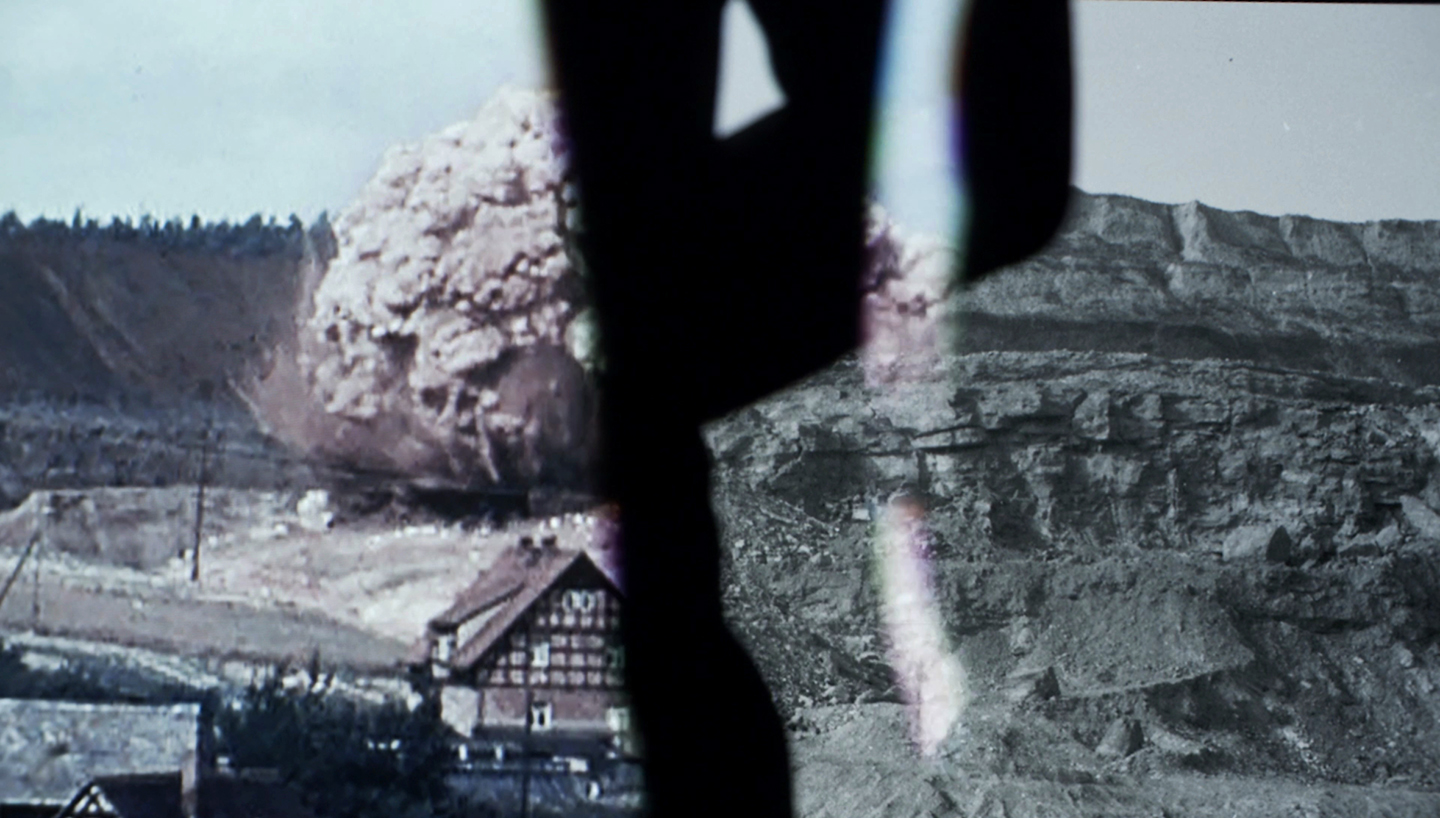
Sun Under Ground
Alex Gerbaulet, Mareike Bernien
2022
/Germany
/39’
A gravel path on the edge of a village. Between fields. Drawn into the map of former uranium mining areas in Saxony and Thuringia. From 1946 to 1990, the Soviet corporation SAG Wismut mined uranium there for the USSR’s nuclear weapons program. Above ground, socialism shines; below, the ancient rocks [...]
06 Oct
— 18:30
/ 87’
Cinema Ideal
.........
14 Oct
— 19:15
/ 87’
Cinema São Jorge Sala M. Oliveira
In this session, we celebrate the resistance of the Ukrainian people. Today, by Sukholytkyy-Sobchuk, the war where life becomes an everyday act of faith and sculptors art to hinder military escalation. From 1930, Dovzhenko’s Earth, a major film work. The winds keep blowing over the Ukrainian grain crops. Sunflowers keep seeking the Sun, but before that you have to plant and Vassily opposes the rich kulaks who try to collectivise the land.

Liturgy of Anti-Tank Obstacles
Dmytro Sukholytkyy-Sobchuk
2022
/Ukraine, United States
/12’
In the nationwide resistance, every citizen tries to be helpful. Ukrainians change professions and adapt to the wartime needs. Sculptors fabricate anti-tank obstacles in their art workshops. Just like the Terracotta Army, silent figures of angels and multiple copies of Jesus Christ froze in anticipation of new creations. Craftsmen weld [...]

Earth
Olexander Dovzhenko
1930
/Ukraine (USSR)
/75’
In the countryside, Vassily opposes the rich kulaks. The return of the young leader brings turmoil to the land he so loved. An ode to the start of collectivization in Ukraine. A delirious imaginary, between fruit and horses on the loose, running in undulating wheat fields. Dovzhenko combines topics such [...]
11 Oct
— 21:45
/ 92’
Cinema São Jorge Sala M. Oliveira
.........
15 Oct
— 22:15
/ 92’
Culturgest Pequeno Auditório
Two films denouncing corrupt systems. In No Nation Without Culture, the family album contrasts with photographs hanging in the facades of Chechen institutions. An operatic film that proves that facades are just facades. In The Ordeal, law and justice are two even more distinct concepts. An elaborate and thorough process carried out by Zuzana Piussi.
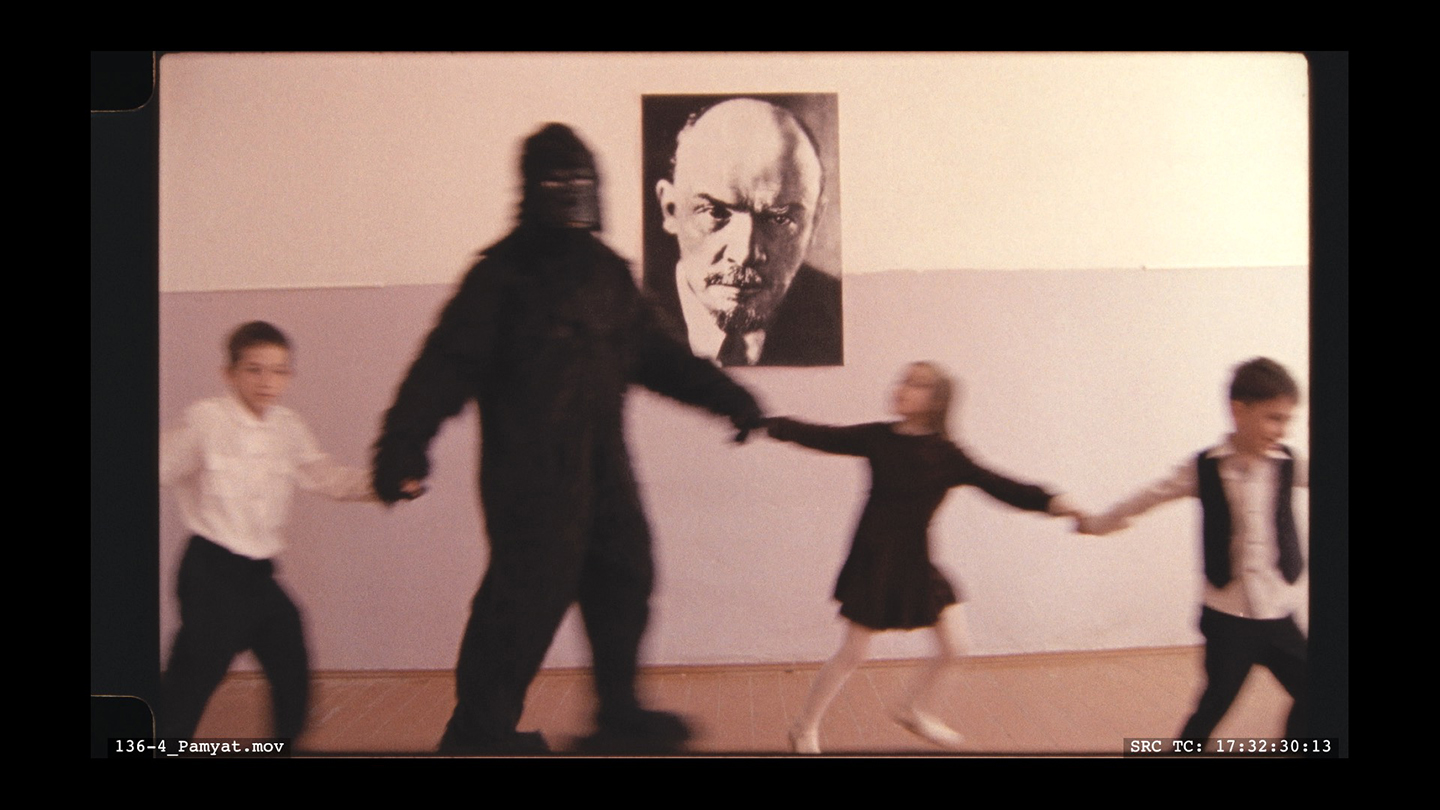
No Nation Without Culture
Vladlena Sandu
2022
/Netherlands, Russia
/17’
“While shooting my feature documentary film, Memory, in April of 2021 in Grozny, Chechnya (the birthplace of my mother and where I grew up), I felt the influence of the gigantic portraits of Putin, Kadyrov Senior and Kadyrov Junior all over the city. They observed me from everywhere. In parallel [...]


The Ordeal
Zuzana Piussi
2021
/Czech Republic, Slovakia
/75’
The seizure of the mobile phone of a mafia businessman suspected of murdering an investigative journalist has exposed a network of judicial influence in major cases. Big asset transfers, the removal of the country’s highest-ranking general in NATO, the bullying of the inconvenient… The trials that followed the murder of [...]
07 Oct
— 21:45
/ 110’
Cinema São Jorge Sala M. Oliveira
.........
16 Oct
— 18:30
/ 110’
Cinema São Jorge Sala M. Oliveira
Being born Brazilian but dying English is these boys’ proposal and challenge, given that dying with the best view can be a privilege for the few. In Tantura, you try to forget the unforgettable; no massacre can fall into oblivion. Between humour and horror, this is how we scrutinise the power of belonging in the world.

British Boys
Marcus Curvelo
2022
/Brazil
/16’
The British Cemetery in Bahia was inaugurated in 1814, and citizens of English origin and their descendants living in the Brazilian state of Bahia are reserved for burial. Fearing death, two men, one black and the other mestizo, do a DNA test in order to discover possible English ancestry, so [...]

Tantura
Alon Schwarz
2022
/Israel, United States
/95’
When the State of Israel was established in 1948, war broke out and hundreds of Palestinian villages were depopulated in its aftermath. Israelis know this as the War of Independence while Palestinians call it Al Nakba (the Catastrophe). This is a story about one such village: Tantura. In the late [...]


08 Oct
— 21:15
/ 122’
Culturgest Auditório Emílio Rui Vilar
.........
10 Oct
— 22:00
/ 122’
Cinema São Jorge Sala M. Oliveira

Secret Friend
Maria Augusta Ramos
2022
/Brazil, Germany, Netherlands
/122’
After almost three decades of democratic stability, Brazil is flirting with fascism. Maria Ramos looks at the decisive role the judiciary has played in this process and how ‘lawfare’—the use of the law as a weapon against political opponents—is endangering democracy. First screening followed by a debate in the presence of Maria Augusta Ramos (director), Sílvia Cruz (producer) and Leandro Demori (former executive director of The Intercept Brasil), and moderated by Lídia Mello (curator and researcher).
14 Oct
— 17:30
/ 90’
Cinema Ideal
.........
16 Oct
— 19:45
/ 90’
Culturgest Pequeno Auditório

Another Spring
Mladen Kovačević
2022
/France, Qatar, Serbia
/90’
Smallpox is the deadliest disease in human history—it killed almost 500 million people in the 20th century alone—and it is the only deadly virus eradicated by humans. The 1972 epidemic in Yugoslavia is still remembered as one of its most horrifying chapters.
09 Oct
— 18:30
/ 97’
Cinema São Jorge Sala M. Oliveira
.........
11 Oct
— 10:30
/ 97’
Culturgest Auditório Emílio Rui Vilar

Aurora's Sunrise
Inna Sahakyan
2022
/Armenia, Germany, Lithuania
/97’
At 14 years old, Aurora lost everything during the horror of the Armenian Genocide. She escaped to New York, becaming a media sensation. With a blend of animation, Aurora’s testimony, and rediscovered footage, the film revives Aurora her forgotten story.
07 Oct
— 11:00
/ 98’
Cinema São Jorge Sala 3
.........
15 Oct
— 18:00
/ 98’
Cinema São Jorge Sala M. Oliveira

Casa Susanna
Sébastien Lifshitz
2022
/France, United States
/98’
"In the 1950s and 1960s, deep in the American countryside, a small wooden house with a barn behind it was home to the first clandestine network of cross-dressers. Diane and Kate are now 80 years old. At the time, they were men and part of this secret organization."
06 Oct
— 22:00
/ 63’
Cinema Ideal
.........
13 Oct
— 21:45
/ 63’
Culturgest Auditório Emílio Rui Vilar

Un Couple
Frederick Wiseman
2022
/France, United States
/64’
Um filme sobre a longa relação entre Lev e Sofia Tolstói, casados durante 36 anos. O filme é o monólogo dela sobre as alegrias e dificuldades da sua vida em conjunto, livremente retirado das cartas que endereçavam um ao outro e das entradas dos diários.
09 Oct
— 19:00
/ 85’
Cinema São Jorge Sala 3
.........
10 Oct
— 10:30
/ 85’
Culturgest Pequeno Auditório

The Day I Discovered that Jane Fonda Was a Brunette
Anna Salzberg
2022
/France
/82’
“I ask my mother about her past feminist commitment, and why she made a child on her own. She doesn’t answer me. I want to pierce the mystery of my mother. I discover the women’s movement of the 1970s, an activist feminist cinema, and the woman filmmaker that I am changes. .” Anna Salzberg

14 Oct
— 19:15
/ 98’
Culturgest Auditório Emílio Rui Vilar
.........
16 Oct
— 19:00
/ 98’
Culturgest Auditório Emílio Rui Vilar

Everything Will Be OK
Rithy Panh
2022
/Cambodia, France
/98’
If animals were in power, would they base their behaviour on humans? Would they have the same thirst for power, the same cruelty? Would they get along with the humans or would they enslave them? Would they have empathy for the living beings with whom they share the planet?
09 Oct
— 21:30
/ 90’
Culturgest Auditório Emílio Rui Vilar

The Fire Within: Requiem for Katia and Maurice Krafft
Werner Herzog
2022
/France, Switzerland, United Kingdom, United States
/81’
Katia e Maurice Krafft, vulcanólogos e cineastas em França, deixaram um arquivo de mais de 200 horas de gravações de uma beleza sem precedentes. Herzog teve acesso ao arquivo todo e fez um requiem que celebra o legado de Katia e Maurice Krafft.
Em colaboração com Canal Odisseia.
12 Oct
— 18:45
/ 90’
Cinema São Jorge Sala M. Oliveira
.........
14 Oct
— 14:00
/ 90’
Cinema São Jorge Sala 3

Invisible Hands
Hugo Dos Santos
2022
/Portugal
/96’
“In the 1970s, a house in Paris hosted dozens of Portuguese draft deserters dodging the colonial war. Only the archives of the Portuguese political police kept evidence of their anti-colonialist activities. From one character to another, gathering testimonials and amateur images, I reconstruct this clandestine memory.” Hugo Dos Santos Director [...]
07 Oct
— 19:00
/ 118’
Culturgest Auditório Emílio Rui Vilar

JFK Revisited: Through the Looking Glass
Oliver Stone
2021
/United Kingdom, United States
/118’
Trinta anos após o seu filme JFK, o realizador Oliver Stone apresenta provas convincentes tornadas públicas recentemente de que, no caso Kennedy, a “teoria da conspiração” é agora “facto de conspiração”.
11 Oct
— 21:30
/ 83’
Culturgest Auditório Emílio Rui Vilar
.........
12 Oct
— 14:00
/ 83’
Cinema São Jorge Sala 3

Blue Apples
Ricardo Leite
2022
/Portugal
/83’
Edila Gaitonde, born in the Azores, was the first Portuguese woman to marry a Goan of Indian origin during the Salazar dictatorship. Through her, we will learn stories about an unknown Goa and a forgotten Portugal.
08 Oct
— 16:45
/ 248’
Cinema São Jorge Sala 3

Mr Landsbergis
Sergei Loznitsa
2021
/Lithuania, Netherlands, United States
/248’
Em 1990, Vytautas Landsbergis tirou o país da União Soviética e forçou Gorbatchov a reconhecer a sua soberania. 30 anos após o colapso histórico da URSS, Landsbergis partilha a história oculta por trás da luta pela independência do seu país.
07 Oct
— 10:30
/ 96’
Culturgest Auditório Emílio Rui Vilar
.........
12 Oct
— 18:00
/ 95’
Culturgest Auditório Emílio Rui Vilar

To the End
Rachel Lears
2022
/United States
/96’
Acabar com a crise climática é uma questão de coragem política e o tempo não pára. Ao longo de três anos de turbulência e crise, quatro notáveis mulheres jovens racializadas lutam por um acordo verde e espoletam uma mudança histórica na política climática dos EUA.
